Research
Ettore Cauvin is a young artistic researcher with projects which focus on music and identity, expanding the possibilities of such niche through interdisciplinarity. His latest investigation focuses on Nordic ecomusical practices and sustainable development.
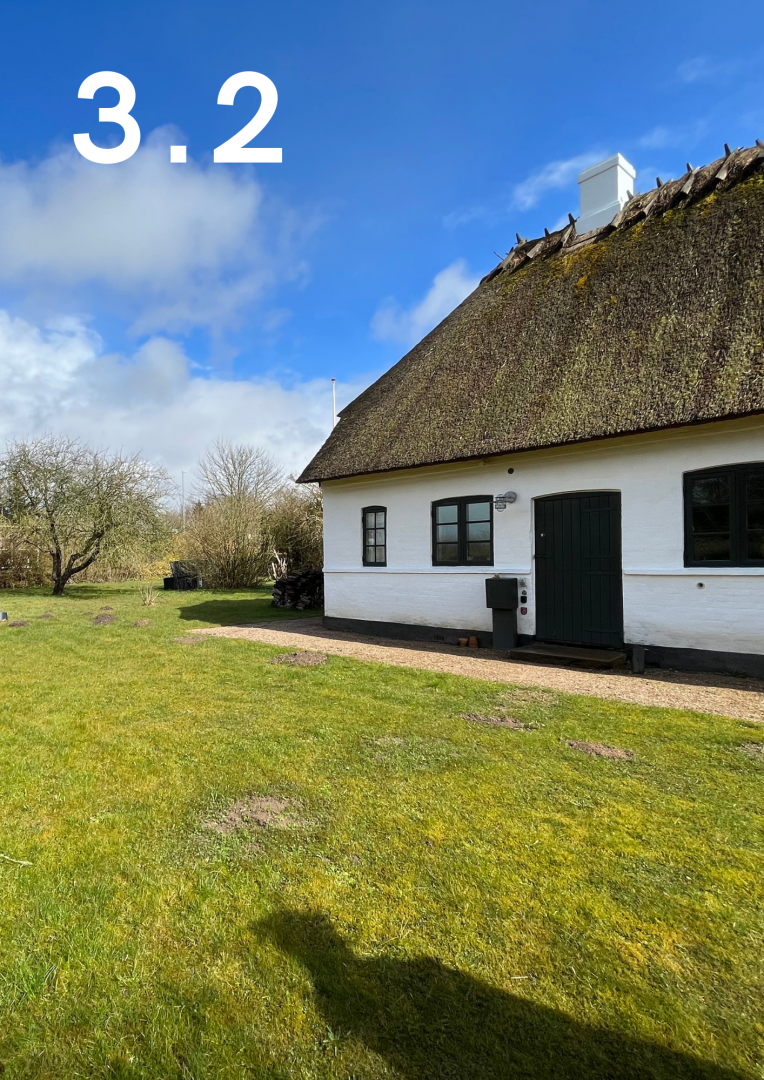
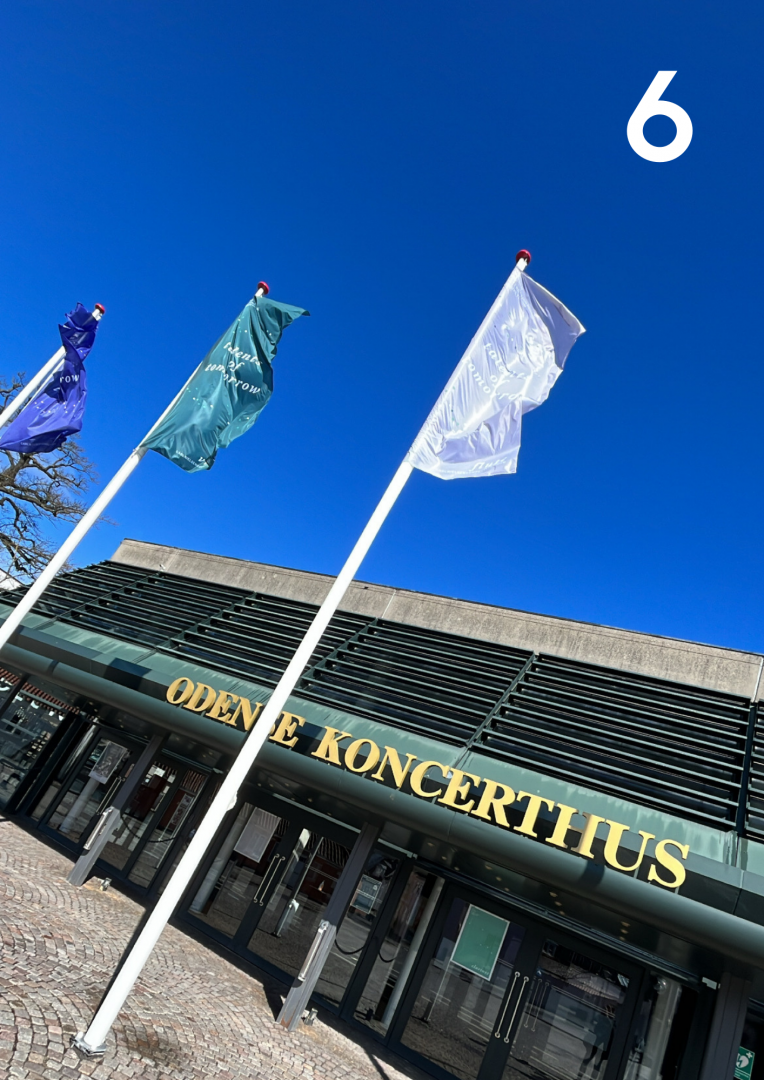
Deeply interested in research and innovation, his publication on Carl Nielsen, Nordic folk dance music and identity brought to life his Danish field research in collaboration with Syddansk Musikkonservatorium - Danish National Academy of Music in Odense, the Carl Nielsen International Competition, the Carl Nielsen's Childhood Home Museum and the Danish Royal Library in Copenhagen.
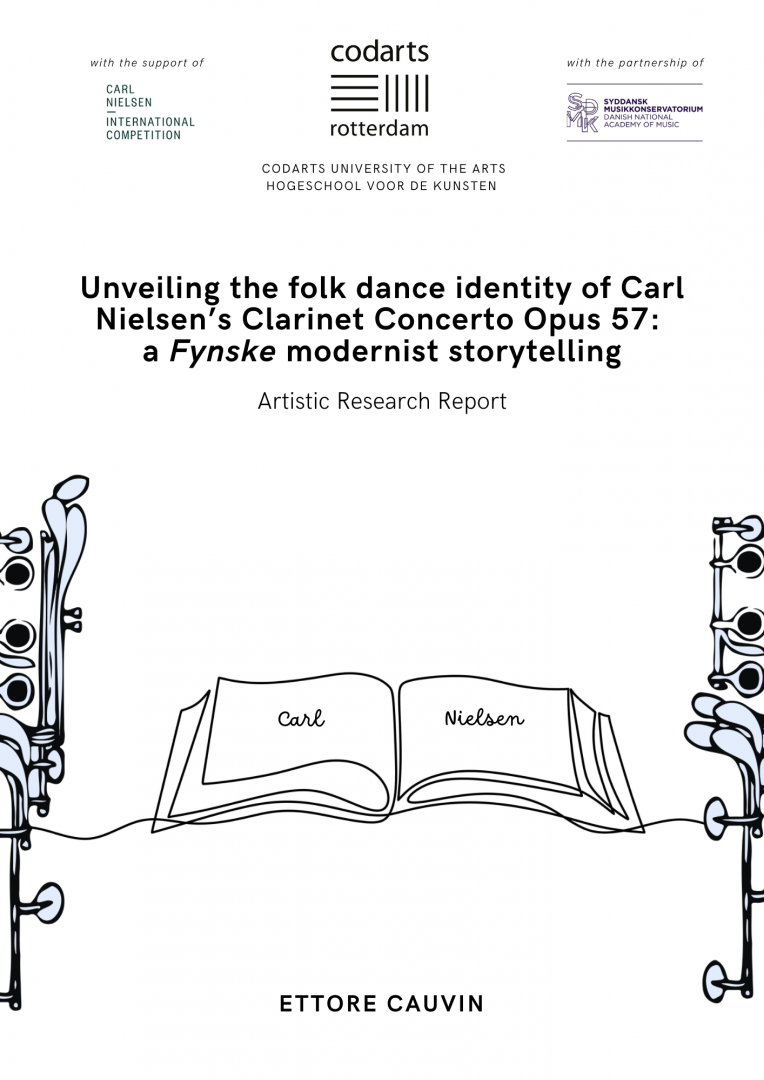
“Unveilling the folk dance identity of Nielsen's Clarinet Concerto Opus 57: A Fynske modernist storytelling” is published by Codarts University of the Arts on the Research Catalogue.
After presenting his project at the New Year Concert 2023 on NPO Klassiek, he has been involved in several research activities. Following AEC’s invitation, he presented his "A personal testimony of artistic research" at the RAPP Lab multiplier event: “Reflect & React. How Artistic Research Empowers Musicians and Performing Artists at Higher Education Institutions” at HfMT Köln (DE) later in May. In June 2023, he was invited to present his research by Radio Canale Italia for an interview on Italian musical excellence in Milan (IT).
In addition to partaking in conferences, he is a regular guest researcher at Carl Nielsen Museet and Syddansk Musikkonservatorium - SDMK (DK).


About the publication:
Carl Nielsen's Clarinet Concerto Opus 57 is a work of a problematic nature for both performers and audiences, who always find it difficult to understand its rich yet intricate content. Despite copious written material, many interpretations are unfortunately significantly misleading because of the extreme technical difficulty of the music and the lack of information about the composer’s identity, especially concerning his production for clarinet and the distinct role of the instrument in Nielsen's life.
My research shows that the composer's roots, the development of his production and the uniqueness of Danish folklore and related dances uncover narrative levels which are fundamental to a correct reading, not only of this work but of Nielsen's music in general.
This study aims to create a multidisciplinary performance that combines the original score with dance and storytelling to enhance its peculiar characteristics, such as the bipolarity of characters and the intrinsic reminiscence of elements of Danish folklore within specific sections. Based on an extensive critical literature review and a fruitful expert consultation, I made analyses, charts and transcriptions, attaching explanatory video recordings as the basis of my work.
Thanks to my field research trip to Denmark, I started designing a new performance combining the folk-related investigation and the extra-musical elements linked to Nielsen’s identity, to both the musical interpretation and imaginative dance performance to show the bipolarity of characters as well as portray the inner storytelling.
The goal of my research here is not to demonstrate Carl Nielsen’s compositional willingness but to establish relations which can help the performer and the audience to connect the music to its vital folk heritage, extraordinary customised spirit and distinctiveness in both dance and storytelling. The artistic result is, in fact, a new hybrid performance of the work which portrays the complex music more consciously and innovatively, combining an informed musical approach with an imaginative choreography and active interplay between the contrasting manic episodes and the homeward feeling of the heartening sections, letting the audience partake in the musical narration. Despite the complex construction and demanding realisation of this kind of creative approach, I firmly believe that the result of this research makes an essential contribution to the understanding and interpretation not only of this work but of the music and identity of Carl Nielsen and the Danish musical tradition for the world of classical music and beyond.
Further research is needed to shed light on the relations between classical and folk music, within performing arts in general, to strengthen their essential role in today's society to make what is usually considered a niche more accessible to the public by exploiting its unique characteristics for a more sustainable artistic and social usefulness.